Free Hot Springs In Iceland And The Cheapest Lagoon Tickets
Iceland does not have to be expensive to enjoy. Some of its hot water is free, some costs about the same as a coffee, and some tickets are worth every krona. Here is where the money actually goes.
Short answer
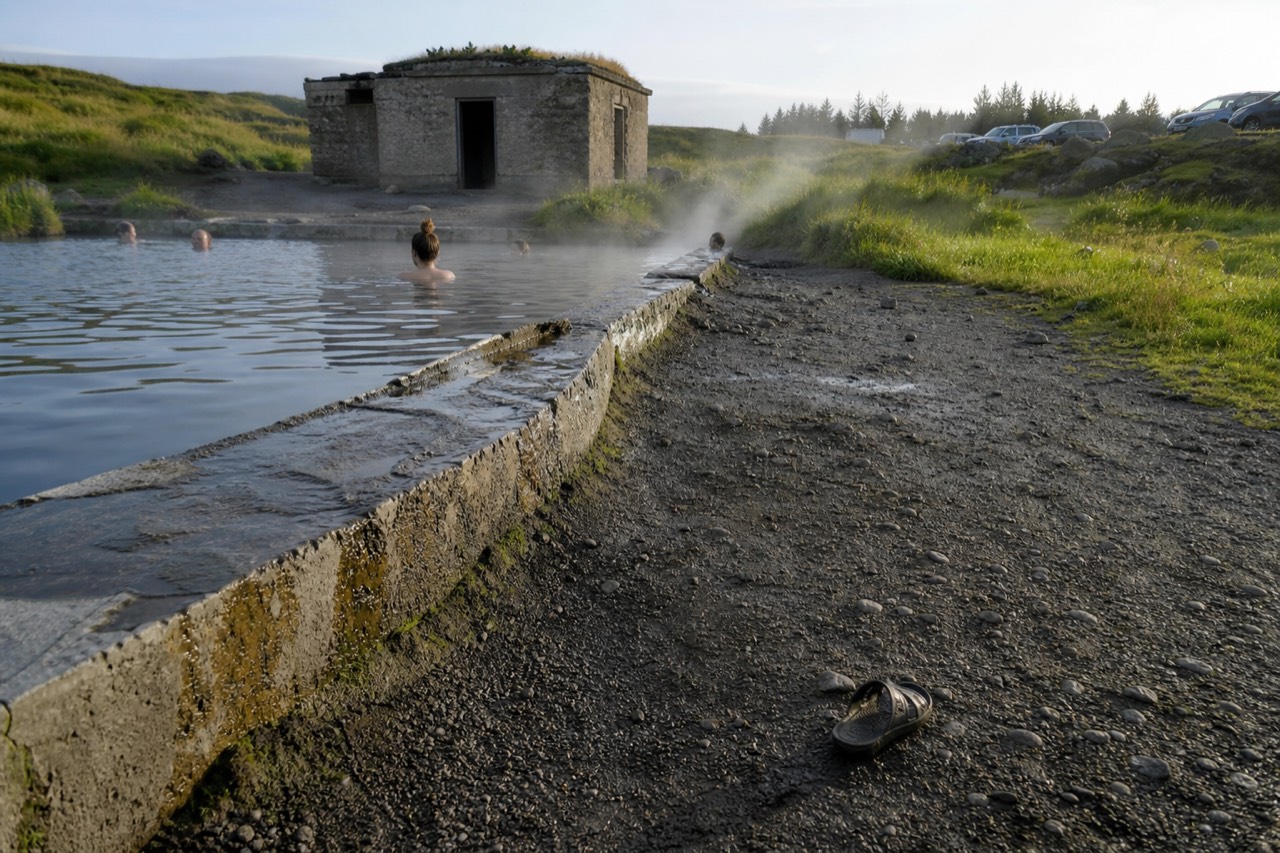
Yes, Iceland has free natural hot springs, and bathing can cost nothing at all if you know where to look. A municipal pool costs around ISK 1300 per Blue Lagoon's own comparison. The cheapest bookable lagoon ticket on this site's roster is Secret Lagoon from $35, followed by Fontana from $47 and Krauma from $50.
What Does It Actually Cost To Bathe In Iceland?
Bathing in Iceland spans three price bands: nothing at all for natural springs and free guided walks, around ISK 1300 for a municipal pool in Blue Lagoon's own published comparison, and from $35 upward for a ticketed geothermal lagoon. The gap between the top and bottom of that range is more than a hundred dollars per person, so the choice genuinely matters for a budget.
Most visitors assume a lagoon ticket is the only way into Icelandic hot water. It is not. The country runs on geothermal energy, heating over 85% of homes and businesses according to Business Iceland, and hot water surfaces all over the landscape, sometimes in supervised spas and sometimes in muddy fields beside a road. What you pay for is not the heat itself. You pay for changing rooms, showers, lifeguards, lockers and a maintained water temperature, and those are exactly the things a free spring does not have.
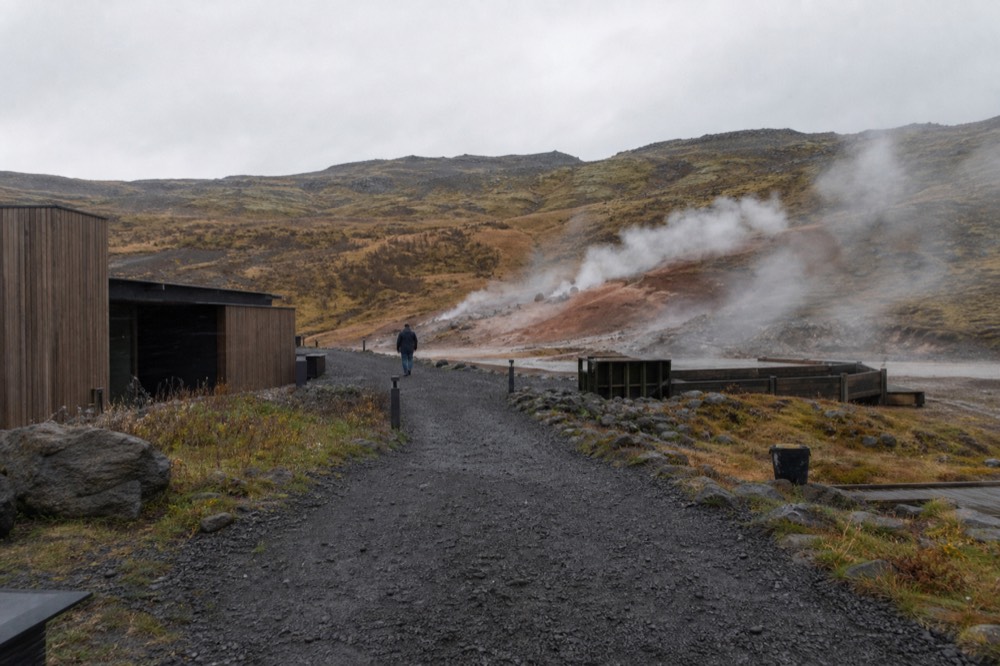
The honest budget question is therefore not "which lagoon is cheapest" but "which tier do I actually need". A traveller who wants to soak under the northern lights with a drink will get value from a ticketed lagoon. A traveller who just wants to feel Icelandic hot water and does not need a towel handed to them can pay very little, or nothing. This page separates the three tiers so the upsell stays natural and the free options get their due.
| Tier | Typical cost | What you get | What you give up |
|---|---|---|---|
| Free natural spring | ISK 0 | Hot water in the ground, scenery, no queues | No changing rooms, no supervision, unmarked temperatures, real scalding risk |
| Municipal pool (sundlaug) | Around ISK 1300 per adult, per Blue Lagoon's comparison of local pools | Lap pool, hot tubs, often sauna, showers, lifeguards | No lagoon aesthetics, no spa ritual, chlorine-treated freshwater |
| Ticketed geothermal lagoon | From $35 (Secret Lagoon) upward on this roster | Geothermal water, changing facilities, towel and drink on many tiers | The price, and often a required booking slot |
Blue Lagoon's own published comparison of itself against local pools is the source for that ISK 1300 figure, and it is worth reading in the venue's own words on its local pools story page. Note the direction of the framing: Blue Lagoon is making the case for its own premium, so treat the pool price as its characterisation of other operators' pricing rather than a verified national tariff.
Are There Any Natural Hot Springs In Iceland?
Yes, and many of them are free to visit. Iceland's geothermal fields surface as hot streams, pools and steaming ground across the country, and unlike the ticketed lagoons most natural springs have no gate, no ticket and no booking. The trade-off is that nothing about them is managed: no changing rooms, no measured temperature, no supervision, and ground that can scald.
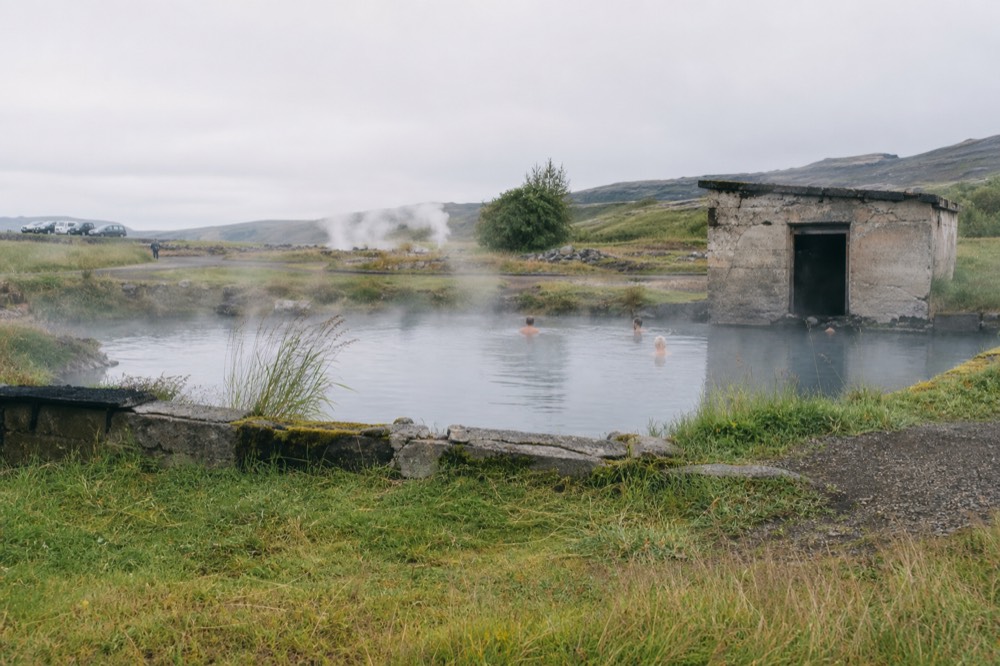
The distinction that matters for a budget traveller is between a natural spring and a commercial lagoon. Secret Lagoon in Flúðir, for instance, is a historic natural pool, the venue itself says it was made in 1891, but today it is a ticketed venue with published prices, hours and a booking system. Reykjadalur near Hveragerði is the opposite case: a hot river you can bathe in for free, with the hike up the valley as the only cost. The new Reykjaböð spa opened on 5 September 2026 at the mouth of that same valley, and RÚV's reporting and the venue's own site place it about 35 minutes' drive from Reykjavík, so the free river and the paid spa now sit at the same trailhead.
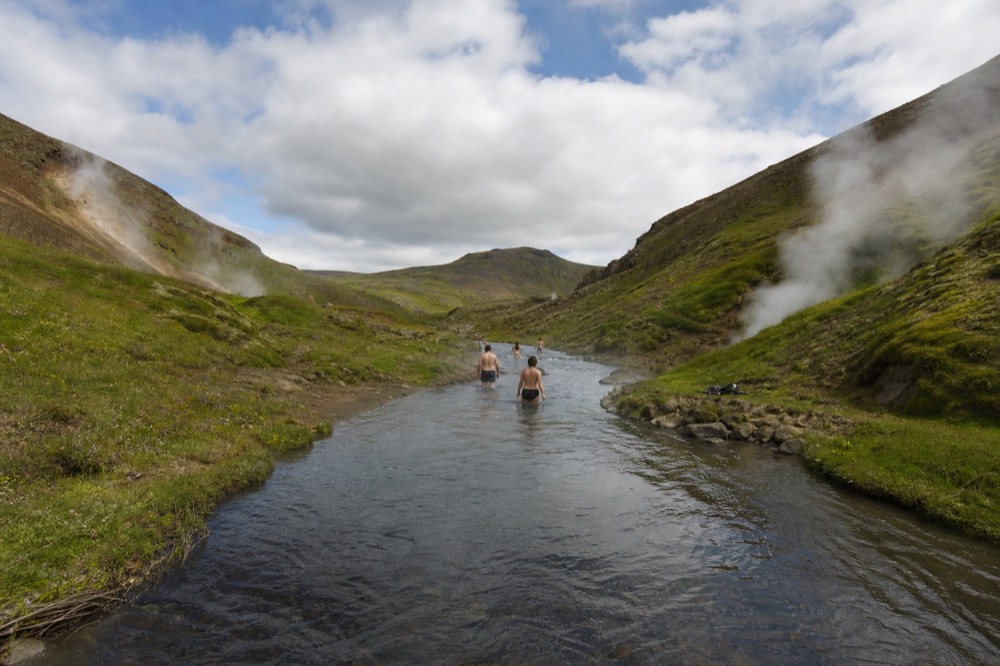
What you give up at a free spring is everything a ticket buys. The table below is the honest ledger, and it applies to every free spring in the country, not just the famous ones.
| What a free natural spring does not have | Why it matters |
|---|---|
| Changing rooms and lockers | You change in the open or in your car, in any weather |
| Supervision or lifeguards | If something goes wrong, help is not on site |
| Marked or controlled temperature | Water near a spring vent can be scalding; only the pooled water further away may be batheable |
| Treated or tested water | Natural springs carry their own microbial reality |
| Shelter, food or drink | Bring everything you need, including a towel |
Never treat a free natural spring as safe by default. Business Iceland's standing advice for hazardous nature sites is to follow warning signs and respect rails and fences, and it names strong undercurrents, slippery stones and unstable ground at hot springs as hazards that "can turn into life-threatening hazards". Icelandic hot ground is genuinely scalding in places, and the steam can hide the difference between a comfortable pool and a vent. If a site is fenced or signed, the fence is there for a reason.
For the same reason, this site will not rank free springs by "safety" or promise that any of them is fine to bathe in. Conditions at natural springs change, water temperature is not monitored, and the only supervision that exists is your own judgement plus whatever signs the landowner or authorities have put up. Check current conditions before you go, and treat every unsupervised spring as something to assess on arrival.
What Is Genuinely Free In Iceland?
Two verified things cost nothing: a pay-what-you-want walking tour of Reykjavik run through GuruWalk, and the free ranger walks that both glacier lagoons ran through the 2026 season. The walking tour is the only verified free guided walk in the country on its listing, and the ranger walks are the only free guided activity at the glacier lagoons, though parking there now costs ISK 1,110 per car.
See this free tour on GuruWalk
The free walk is "Sweet Streets of Reykjavik: History, Culture & Icelandic candy tasting", guided by Gigi. It runs about two hours, in English and Spanish, on a pay-what-you-want basis, and its own listing shows a 4.6 rating from 87 reviews. It meets in central Reykjavik. One honesty note: the listing carries two different meeting-point descriptions that do not agree, so confirm the meeting point on the listing itself before you go rather than trusting any summary, including this one. A second note in the same spirit: GuruWalk publishes exactly one live free walk in all of Iceland, so this is the one free guided activity of its kind, not the first of a list.
At the other end of the country, the glacier lagoons run free interpretive ranger walks. In the 2026 season, Vatnajökull National Park's ranger programme ran a daily "Blue gold" walk at Jökulsárlón at 11:00 from 1 June to 30 September, and a daily "About a mountain" walk at Fjallsárlón at 15:00 from 15 June to 15 August. Both are free, both are led by park rangers, and both are the cheapest possible way to understand what you are looking at. The catch that belongs in the same breath: Jökulsárlón now charges for parking, ISK 1,110 per passenger car, valid until midnight on the date paid, with a 50% discount if you visit another park service area the same day. The walk is free; the parking is not, and that is the cost that catches people out.
There is a third category of "free" that deserves a sceptical eye. Many hot springs described online as free and hidden are nothing of the sort. Every commercial lagoon on this site's roster is a ticketed venue with a booking engine, and describing any of them as secret or off the beaten path would be dishonest. The genuinely free hot water is the unsupervised kind described in the previous section, with all of its trade-offs intact.
Which Are The Cheapest Lagoon Tickets Worth Paying For?
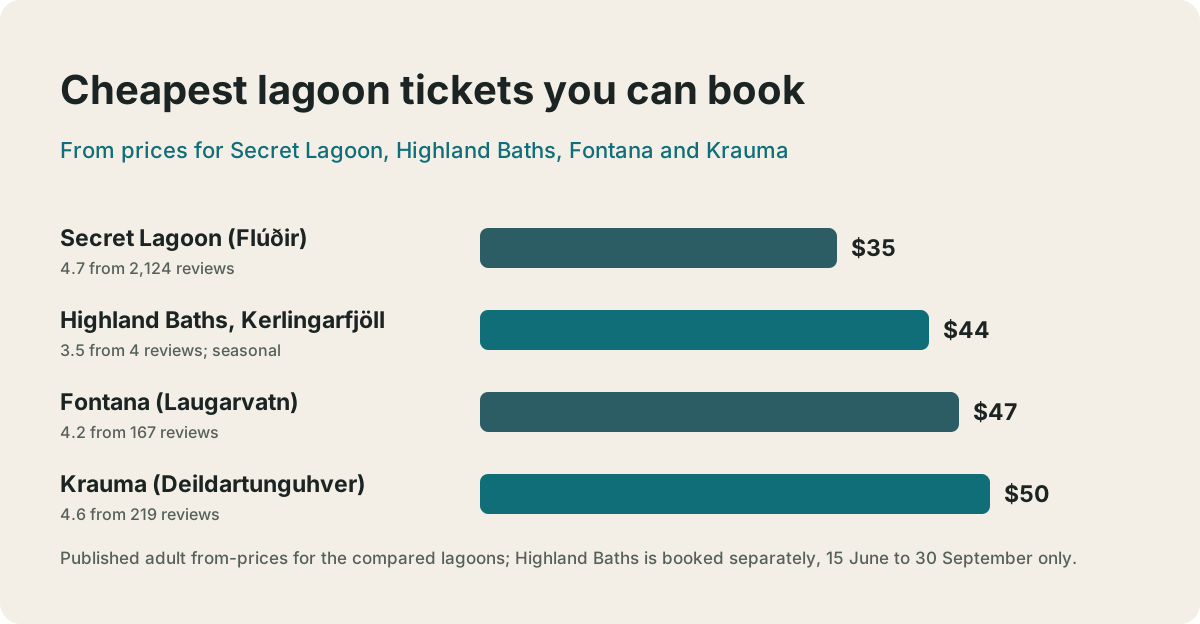
The three cheapest bookable lagoon tickets on this site's roster are Secret Lagoon from $35, Fontana from $47 and Krauma from $50. Below them sits only the Highland Baths editorial listing at $44, which runs 15 June to 30 September only and carries a 3.5 rating from just four reviews. The cheapest ticket that is clearly worth its price is Secret Lagoon, at 4.7 from 2,124 reviews.
Price alone does not make a ticket a good buy, and the rating basis matters as much as the rating. Fontana's 4.2 from 167 reviews is the lowest rating on the roster, and this site states that plainly rather than hiding it. The Highland Baths figure of 3.5 comes from four reviews, which is too thin a basis to treat as a verdict either way. Secret Lagoon's 4.7 from 2,124 reviews is the strongest evidence base in the cheap tier, and at the roster's lowest dollar price it is the obvious budget pick. The full index of guides sits on Lagoons in Iceland.
| Ticket | From price | Rating and reviews | What the base ticket includes |
|---|---|---|---|
| Secret Lagoon (Flúðir) | $35 | 4.7 from 2,124 reviews | Entry to the historic pool; venue publishes ISK 4500 adult admission, swimsuit and towel rental ISK 1200 each |
| Highland Baths, Kerlingarfjöll | $44 | 3.5 from 4 reviews | Entry, 2 hours, 15 June to 30 September only, F-road access |
| Fontana (Laugarvatn) | $47 | 4.2 from 167 reviews | 2-hour entry; venue publishes ISK 7490 adult bath admission |
| Krauma (Deildartunguhver) | $50 | 4.6 from 219 reviews | 4-hour entry; venue publishes ISK 7900 adult admission |
| Reykjaböð (Hveragerði) | $64 | no reviews yet | Entry, outdoor ritual area with event sauna, cold plunge, Kneipp pool, towel; opened 5 September 2026 |
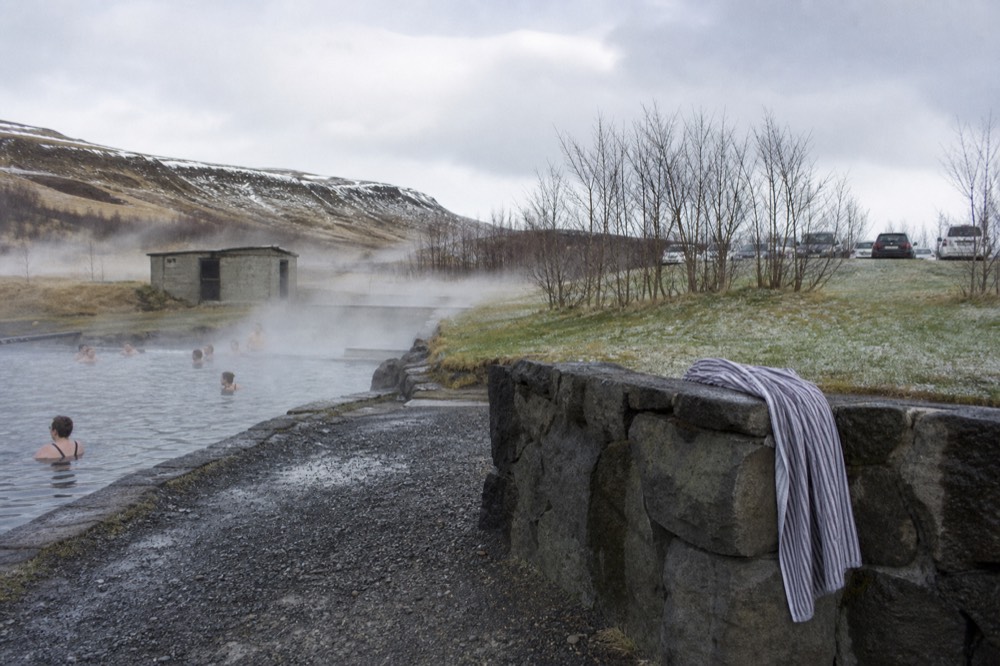
Secret Lagoon is the budget anchor for a reason beyond price. The venue publishes continuous flow, with the pool water fully replaced every 24 hours, held at 38 to 40 Celsius year round. Pre-booking is recommended, and the venue says plainly that it cannot guarantee a spot without one. Its own claim to be the oldest swimming pool in Iceland is the venue's, not an independent finding, and this site reports it as such. For the full picture, see the Secret Lagoon visitor guide.
If the budget only stretches to a single paid soak on the whole trip, this is the one to spend it on: the cheapest ticket on the roster, the strongest review base in its tier, and a genuinely historic pool rather than a purpose-built spa. Everything above it in price adds facilities rather than adding geothermal water.
How Does A Municipal Pool Compare With A Lagoon?
A municipal pool costs around ISK 1300 per adult in Blue Lagoon's published comparison, against ISK 4500 at Secret Lagoon and ISK 7490 at Fontana on the venues' own price pages. The pool gives you hot tubs, a lap pool, showers and lifeguards. The lagoon gives you geothermal water, atmosphere and, on most tiers, a towel and a drink. Neither is a substitute for the other.
The municipal sundlaug is Iceland's own bathing culture, and it is the cheapest supervised hot water in the country. Blue Lagoon describes the typical local pool as having a lap pool, several hot tubs at different temperatures, often a steam bath or sauna, treated and chlorinated freshwater, and no booking needed. Reykjavík City's own swimming guidance adds the practical rules: shoes off before the changing rooms, a thorough naked shower with soap before entering, and swimwear on after. That shower rule is not a house quirk but a legal requirement under Icelandic regulation 814/2010, which mandates that bathing facilities display instructions to wash without swimwear before entering the pool.
| Municipal pool | Ticketed geothermal lagoon | |
|---|---|---|
| Adult entry | Around ISK 1300, per Blue Lagoon's comparison | ISK 4500 at Secret Lagoon to ISK 7490 at Fontana and beyond |
| Water | Treated, chlorinated freshwater | Geothermal water, often with no chlorine, renewed by continuous flow |
| Facilities | Hot tubs, lap pool, showers, often sauna | Lagoon, steam baths, saunas, changing facilities, often towel and drink |
| Booking | Walk in | Booking recommended or required at most venues |
| Atmosphere | Local, functional, unglamorous | Scenic, designed, photographed |
The budget answer is to use both. A sundlaug is the cheap everyday soak, and the city's own guidance is worth reading before your first visit on the Reykjavík City swimming page. A lagoon ticket is the occasion. If the budget only stretches to one paid soak, the cheapest tier of lagoon delivers the geothermal experience the municipal pool cannot, and the second-cheapest ticket on the roster, Fontana at from $47, sits right on that line. Fontana reopened after a complete renovation on 1 August 2026, sits directly on the shore of Laugarvatn lake, and runs a geothermal bakery tour alongside the baths; the details are in the Fontana baths guide.
Where Is The Best Value In The Middle Tier?
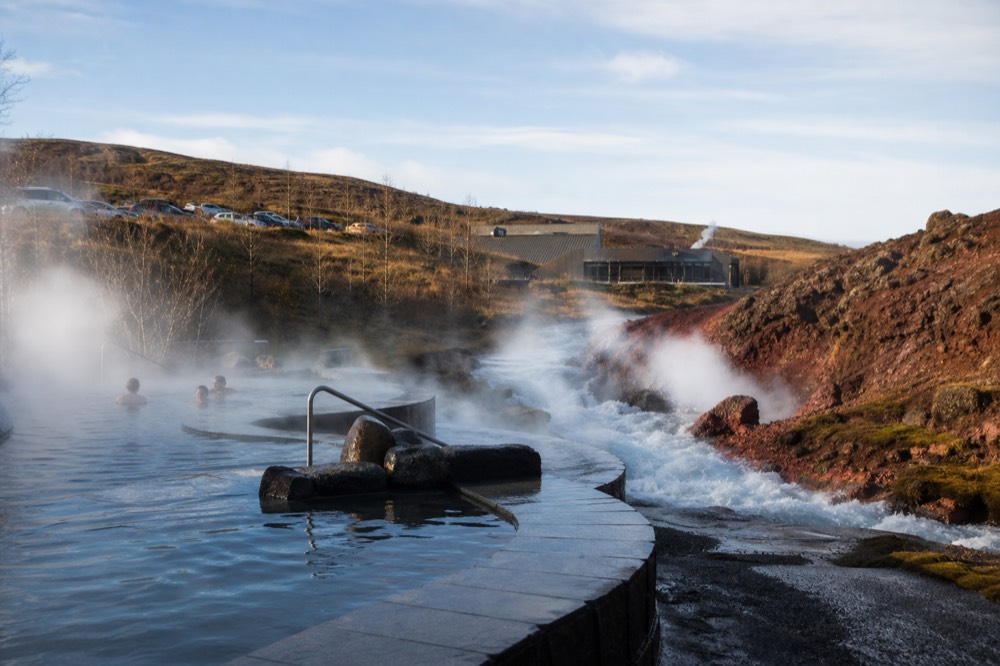
Krauma at from $50, 4.6 from 219 reviews, is the strongest value in the middle of the roster because its base ticket runs four hours, longer than most, and the spa mixes water from Deildartunguhver with cold glacier water. Krauma attributes to that spring the highest flow rate of hot springs in Europe, at 180 litres of 100°C water per second. At ISK 7900 adult admission, it undercuts the capital-area lagoons.
Value in the middle tier is about what the ticket buys per hour and per krona, not just the headline price. Krauma's four-hour admission window is the longest on the roster at this price level. The spa offers five hot baths at 37 to 42 Celsius plus a cold plunge at 5 to 10 Celsius, all fed by the spring next door. The venue's own claim about Deildartunguhver's flow rate is attributed to Krauma, as is the detail that the spring's hot water also heats homes in West Iceland. For the full picture including the nearby fern that grows nowhere else, see the Krauma and Deildartunguhver guide.
The middle tier also contains the roster's newest wildcard. Reykjaböð in Hveragerði opened on 5 September 2026, which makes it the newest lagoon in the country, and its base ticket at from $64 includes entry, the outdoor ritual area with an event sauna, a cold plunge, a Kneipp pool, a wristband for lockers and payments, changing facilities and a towel. It carries no rating and zero reviews, because it has existed for days. Budget travellers who like new venues with no crowds can read the Reykjaböð Hot Springs guide, but nobody can yet tell you whether it is good.
How Do You Plan A Lagoon Budget Without Getting Caught Out?
Plan for three costs beyond the ticket: transport, rentals and the shower rule's implications. Swimsuit and towel rental runs ISK 1200 at Secret Lagoon and ISK 1400 at Krauma, so bringing your own saves real money across a trip. Book ahead where venues require it, and check safetravel.is before driving to any rural spring.
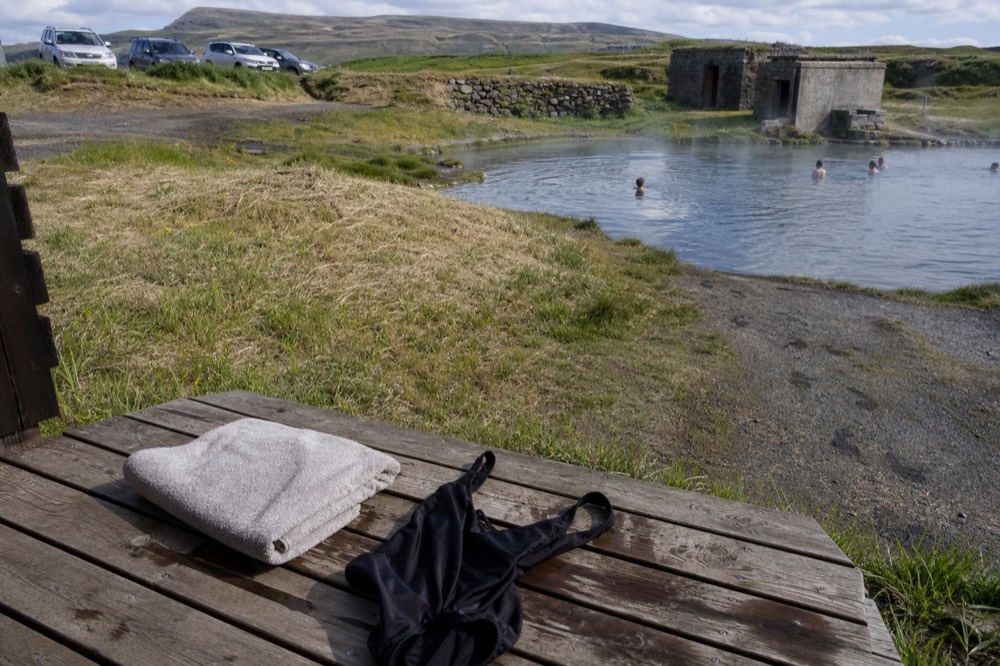
The rental line is the quiet budget killer. At Secret Lagoon, renting a swimsuit and a towel costs ISK 1200 each, which is more than half the adult admission again. The same maths repeats at nearly every venue on the roster. A quick-dry towel and a swimsuit in your carry-on pay for themselves within two visits. The shower rule has a budget angle too: soap, shampoo and shower gel are provided at the venues that publish their inclusions, so there is nothing to buy on that front, but you do need to know the rule exists before you arrive, because it applies everywhere. The full etiquette picture is in the Iceland hot springs rules and etiquette guide.
Transport is the other line item. Only two venues in scope run or brand their own transfer: Forest Lagoon operates a free shuttle from Akureyri, and Blue Lagoon names one official transport partner. Everyone else expects you to drive, take a scheduled bus or join a tour, and a budget plan that ignores that cost is not a budget plan. For comparing every ticket price on the roster side by side, the Iceland lagoon ticket prices compared guide carries the full table.
One safety note belongs in any budget plan, because free and cheap often means unsupervised. The emergency number in Iceland is 112, and safetravel.is, run by the Icelandic Association for Search and Rescue, is the standing source for current conditions; its safety conditions pages carry live alerts. Business Iceland also notes that Icelandic networks no longer run 2G or 3G, so an older phone may have limited connectivity exactly when you need it. A budget trip that skimps on a working phone and a conditions check has saved money in the wrong place.
Common Questions About Free Hot Springs In Iceland
Are there any natural hot springs in Iceland?
Yes. Geothermal water surfaces across the country as hot streams, pools and steaming ground, and many natural springs are free to visit with no gate or booking. They come with real trade-offs: no changing rooms, no supervision, no marked temperatures, and ground that can scald. Ticketed lagoons like Secret Lagoon are historic natural pools that have been developed and priced; unsupervised springs remain free precisely because nobody manages them.
What is the cheapest lagoon ticket in Iceland?
On this site's roster, the cheapest bookable lagoon ticket is Secret Lagoon at from $35, rated 4.7 from 2,124 reviews. Fontana follows at from $47 and Krauma at from $50. The Highland Baths at Kerlingarfjöll has an editorial listing at $44, but it runs only 15 June to 30 September and its 3.5 rating rests on four reviews.
Is a municipal pool worth it instead of a lagoon?
For a cheap, everyday soak, yes. Blue Lagoon's own published comparison puts a typical local sundlaug at around ISK 1300 for adults, with hot tubs, a lap pool, showers and no booking. The water is treated freshwater rather than geothermal lagoon water, so it is a different experience, not a cheaper copy of one.
Is anything in Iceland genuinely free?
Two verified things: the pay-what-you-want "Sweet Streets of Reykjavik" walking tour on GuruWalk, about two hours, rated 4.6 from 87 reviews, and the free ranger walks that ran daily at both glacier lagoons in the 2026 season. Note that Jökulsárlón now charges ISK 1,110 per car to park, and the walking tour's listing shows two conflicting meeting-point descriptions, so confirm on the listing before you go.
Are free hot springs safe?
This site does not call any free natural spring safe. Unsupervised springs have no measured temperature, no lifeguards and no tested water, and ground near vents can scald. Follow Business Iceland's standing advice: respect signs, fences and rails, and check safetravel.is for current conditions before you travel.
How can I keep lagoon costs down?
Bring your own swimsuit and towel, since rentals run ISK 1200 to 1400 at the cheaper venues, book the cheapest tier rather than the top one, and use municipal pools for everyday soaks while saving a lagoon ticket for one occasion. Plan transport in advance, because most venues outside the capital area have no shuttle of their own.